Mr REPACHOLI (Hunter) (13:05):
G’day everyone,
Firstly, thanks for inviting me to be part of this conversation today.
Can I thank Ed, Daniel, Sue and Matt. I really appreciate the work TradeMutt and TIACS do and the broader alliance around it.
What you’re doing is genuinely saving lives. That’s not political spin, it’s just the reality.
For those who don’t know me, I’m Dan Repacholi, the Federal Member for Hunter in NSW and the Australian Government’s Special Envoy for Men’s Health.
Before politics I spent most of my life around construction sites, workshops and working blokes. That background probably shapes how I approach this issue.
Because men’s health, especially mental health, isn’t just a policy issue to me. It’s something you see every day when you grow up around those industries. It’s something you see among your mates, your workmates and your community.
That’s why the work organisations like TradeMutt and TIACS are doing resonates so strongly with me.
The Hunter region I represent is a big regional area north of Sydney.
We’ve got mining, manufacturing, construction, transport, agriculture and a lot of industries that are traditionally male-dominated.
So when we talk about men’s health in my community, we’re not talking about some abstract policy concept.
We’re talking about the bloke working underground at the coal mine. We’re talking about the tradie driving two hours home after a long shift. We’re talking about the farmer dealing with drought or debt. We’re talking about the apprentice who’s just starting out and trying to find his feet.
And unfortunately we also see some of the worst outcomes.
Men in these industries are often doing physically demanding work, sometimes isolated work, sometimes shift work. That combination can really impact both physical health and mental health.
Across Australia, men are over-represented in many of the worst health outcomes.
Men account for around three-quarters of suicides in Australia, and suicide is the leading cause of death for men aged 15 to 44. When you look at regional areas like the Hunter, those risks can be even higher.
That’s why this conversation matters so much.
Because the solutions often need to meet men where they already are — on job sites, in workshops, at footy clubs, in sheds or through services that are designed specifically for them.
My role as Special Envoy for Men’s Health is really about bringing those conversations together.
It’s about making sure men’s health stays on the national agenda. It’s about working with government, researchers, community organisations and industry to improve outcomes.
But it’s also about listening.
Listening to the people actually doing the work on the ground. Listening to organisations who are innovating in this space. And listening to men themselves about what actually works.
Because the reality is men engage with health differently.
We know many men delay seeking help.
Around sixty per cent of men with symptoms wait more than a week before seeing a doctor, and about a third wait more than a month. That delay can mean problems get worse before they get better. Sometimes much worse.
A big part of the conversation in men’s health is about reducing those barriers — breaking down stigma and designing services that actually work for the way men engage.
If we step back and look at the bigger picture, Australian men are among the healthiest in the world, but there are still some really persistent challenges.
Men live on average about four years less than women. Men are more likely to die from preventable conditions and they’re more likely to experience chronic disease earlier in life.
Around seventy per cent of men are overweight or obese.
Men are significantly more likely to die from cardiovascular disease than women. And thousands of men die from prostate cancer each year in Australia.
But one of the biggest challenges is engagement with the health system.
A lot of men grow up with the idea that you just tough things out. The “she’ll be right” mentality. You ignore the symptoms. You push through the pain. You keep going.
Sometimes that resilience is a strength.
But sometimes it stops people from getting help early, and that’s something we really need to change.
When we talk about men’s health, mental health has to be front and centre.
The statistics are confronting.
Men make up about seventy-five per cent of suicide deaths in Australia. Men are also significantly less likely than women to seek professional mental health support.
That gap is something we need to address.
But it’s not just about telling men to talk more.
It’s about creating environments where those conversations feel natural and safe.
Sometimes that conversation starts with a GP or a counsellor, but often it starts somewhere much more informal.
It might start on a job site. It might start in a Men’s Shed. It might start in the ute driving between jobs or around a BBQ.
That’s where initiatives like TradeMutt and TIACS come in.
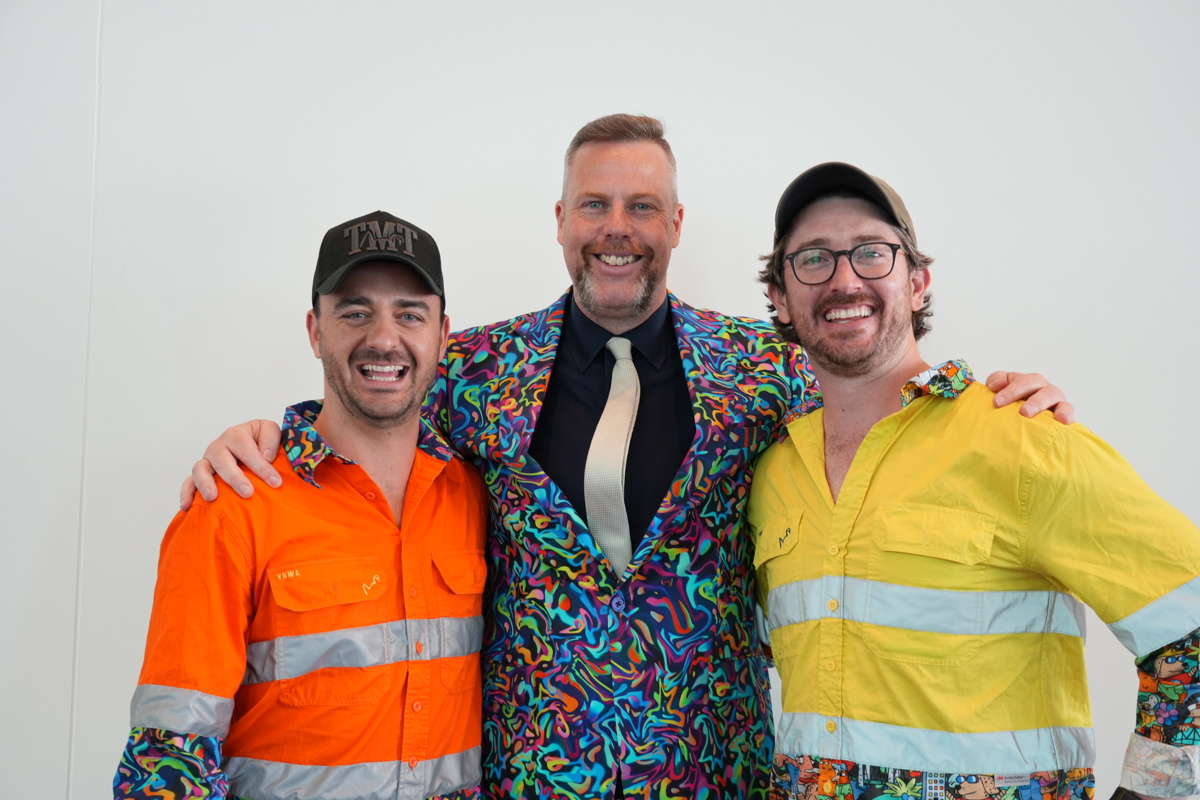
I’ve had the chance to spend time with the TradeMutt team and what they’ve built is honestly one of the most innovative approaches to mental health I’ve seen.
They’ve taken something that already exists in tradie culture, workwear, and turned it into a conversation starter.
Those bright shirts aren’t just clothing.
They’re a signal. They’re permission to have a conversation. They send the message that it’s okay to talk about this stuff.
One of the things I did last year was wear a custom TradeMutt suit into Federal Parliament while delivering a speech on men’s mental health.
It was bright, it was loud, and it definitely got people’s attention.
But that was the whole point.
If a bold suit starts conversations about mental health in Parliament, in workplaces or out in the community, then it’s doing its job.
That suit represented something much bigger than clothing.
It represented the idea that we need to talk about this issue openly and honestly.
Too many blokes are still doing it tough in silence.
And if something as simple as a bright suit or a bright shirt gets one bloke talking, or one mate checking in on another, then it’s worth it.
The other powerful thing about TradeMutt is that it isn’t just about awareness.
It’s backed up by something practical, and that’s the TIACS counselling service.
Because once the conversation starts, people need somewhere to go next.
TIACS removes a lot of the barriers that traditionally stop men getting help.
It’s free. It’s confidential. It’s tailored to the industries that need it most. And it’s accessible.
If someone finishes a shift at six o’clock and they’re struggling, they can reach out then and there.
They don’t have to wait weeks for an appointment or try to navigate the health system.
They can just talk.
That might be in their ute after a shift, in the shed at home, or sitting on the back step after a tough day.
Sometimes having someone on the other end of a phone or text who understands that world can make all the difference.
Services like TIACS are also powerful because they meet people in industries where mental health conversations have historically been difficult.
Tradies, truckies, farmers, miners and apprentices are the backbone of this country.
They build our homes, keep the lights on, move the freight and grow the food.
But those same industries can also carry a heavy mental load.
Long hours, physical work, financial pressure, isolation and time away from family can all play a role.
That’s why it’s so important that support services understand those environments and speak that language.
From a policy perspective, there has been increasing focus on men’s health over the past decade.
Hundreds of millions of dollars have been invested in men’s health and mental health initiatives across Australia.
More recently the Albanese Government announced a package focused specifically on improving men’s health and wellbeing.
That includes programs that train health professionals to better engage with men around mental health.
There are resilience programs being delivered to boys through sporting clubs.
There’s expanded support for Men’s Sheds around the country.
And there are programs supporting fathers’ mental health as they navigate early parenthood.
Because men’s health isn’t just about responding to crisis.
It’s about prevention as well.
It’s about building resilience early and creating strong support networks.
One of the strongest protective factors for men’s mental health is connection.
Strong relationships and strong communities make a huge difference. Places where men feel they belong.
That’s something regional communities often do really well.
Footy clubs, Men’s Sheds, volunteer groups and community organisations all create opportunities for conversations that might not happen elsewhere.
They also reduce isolation, which we know is a major risk factor for poor mental health.
That’s why community-based programs are so important and why partnerships between government, industry and organisations like TIACS matter so much.
Another key focus is industries where suicide risk is higher.
Construction, mining and agriculture are all examples.
These industries can involve long hours, physical strain, isolation and sometimes job insecurity.
For some workers there’s also the challenge of FIFO work or long commutes away from family.
All of that can impact mental health.
That’s why targeted programs matter.
Programs that are built with those industries, speak their language and operate in the environments where people already are.
Again, that’s exactly what TradeMutt and TIACS are doing.
One of the biggest challenges in men’s health is culture.
For a long time there’s been an idea that seeking help is a weakness.
But the reality is the opposite.
Looking after your health, whether it’s physical or mental, is responsible. It’s leadership. And it’s something we need to normalise.
The good news is that change is already happening.
We’re seeing more conversations about mental health than ever before. We’re seeing more people sharing their experiences and encouraging others to reach out.
But we still have a long way to go.
If we get this right, the benefits go far beyond men themselves.
When men are healthier, families are stronger. Relationships are stronger. Communities are stronger.
Workplaces are safer and more productive.
So investing in men’s health is not just the right thing to do socially.
It’s also the smart thing to do economically.
Looking ahead, I think there are a few key priorities.
We need to continue reducing stigma around mental health.
We need to improve access to services, especially in regional areas.
We need to design services that actually engage men rather than expecting men to adapt to systems that don’t work for them.
And we need to keep strengthening partnerships between government, industry and community organisations.
No single organisation can solve this issue on its own.
It requires collaboration.
And that’s exactly what this roundtable represents.
Before I wrap up, I just want to say thank you to everyone involved in TIACS and the broader alliance.
The work you’re doing is incredibly important.
You’re reaching people who might never otherwise engage with mental health services. You’re starting conversations that genuinely save lives.
From my perspective, both as the Member for Hunter and as Special Envoy for Men’s Health, I’m committed to continuing that work.
Working with organisations like yours, listening to what’s happening on the ground and pushing for policies that make a real difference.
Because when men stay healthy, families stay strong and communities stay strong too.
Thanks again for having me today and I’m really looking forward to the discussion.