
I would like to begin by acknowledging the Traditional Custodians of the land on which we meet today, the Wonnarua people, and pay my respects to Elders past and present.
I extend that respect to all Aboriginal and Torres Strait Islander peoples here today.
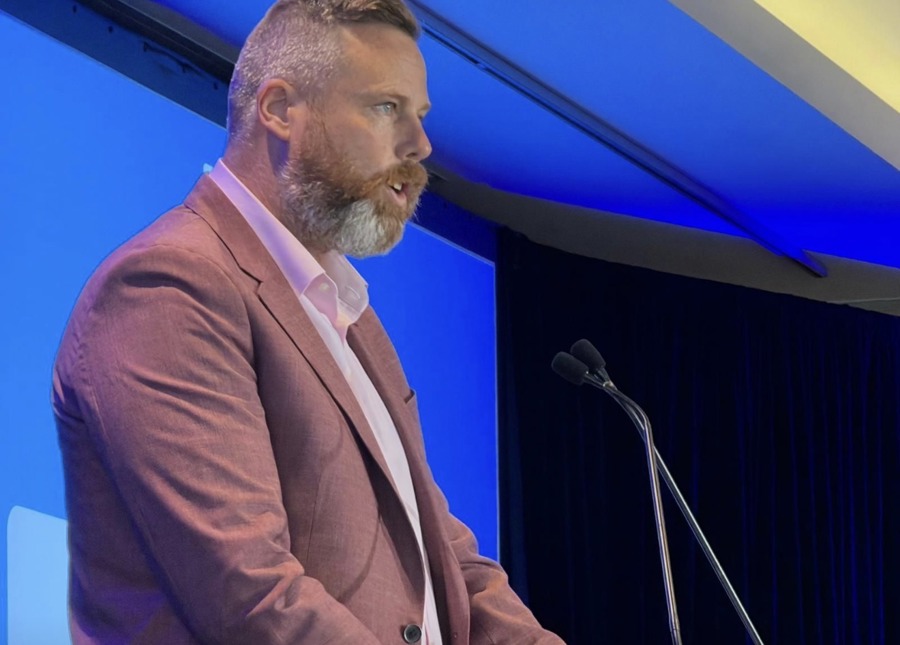
It is a real privilege to be here with you at the Pharmaceutical Society of Australia NSW Annual Therapeutic Update Conference and to be speaking to a room full of professionals who are right at the frontline of primary care in our communities.
I stand here today not just as the Federal Member for Hunter, but also in my role as Australia’s Special Envoy for Men’s Health, and that role has given me a unique opportunity to hear directly from men across the country about the barriers that stop too many of them from engaging with the health system early enough.
Before I ended up in Parliament, I was about as far from your typical Canberra politician as you can get.
I was born in Carlton in Victoria and grew up in Melton South in a working family where Mum was a nurse and Dad was a quarantine officer.
I left school at fifteen and started an apprenticeship as a fitter and turner, spending the next decade on the tools in a tough old school workshop that taught me the value of hard work and teamwork.
Around the same time I found my love for shooting at the local pistol club, which eventually led to me representing Australia on the world stage from 1998, competing at five Olympic Games and four Commonwealth Games and bringing home three gold and three bronze medals.
I later moved into the mining industry here in the Hunter, working as a line borer before spending seven years at Mount Thorley Warkworth as an operator and trainer.
In 2017 I took on the role of managing a new engineering workshop and helped grow it from a small team into a business employing more than seventy people across the region.
Then in 2022 I was elected as the Federal Member for Hunter and was lucky enough to be re elected in 2025, bringing with me the values shaped by family, trade, sport and working life in regional Australia.
Shortly after being elected, Prime Minister Anthony Albanese asked me to take on the role of Australia’s first Special Envoy for Men’s Health.
That came off the back of me being pretty open about my own health journey, including the fact that I had reached a point where I was genuinely embarrassed to go and see my doctor because of how much weight I had put on.
I realised there would be millions of other blokes out there feeling exactly the same way, putting off that first conversation until something goes seriously wrong.
Taking on this role has given me the chance to turn that personal experience into something positive by getting more men and boys talking about their physical health, their mental health and the things they are often too reluctant to raise with their GP, their family or even their mates.
And it was through that experience that I really started to understand something we see play out across the country every single day.
For too long men’s health has been treated as an afterthought.
Men are expected to be the rock, the problem solver, the one who just gets on with it.
But the truth is that a lot of men are doing it tough and doing it quietly.
We know that Australian men live on average more than four years less than women.
We know that men living in very remote areas can die up to thirteen years earlier than those in cities.
We know that rates of potentially avoidable deaths are more than two times higher in remote areas than in metropolitan areas.
We know that around seventy one percent of Australian men are overweight or obese.
We know that men are one point three times more likely to have type two diabetes than women and forty percent more likely to die from cardiovascular disease.
More than three thousand five hundred Australian men die each year from prostate cancer.
Suicide remains the leading cause of death for men under sixty five in Australia and men account for around three quarters of all suicides.
Australian men are also three times more likely to take their own life than women which highlights the importance of accessible early intervention across the primary care system.
These are not abstract statistics.
These are fathers, sons, brothers, partners, workmates and mates from the local footy club.
Men are also significantly more likely to die from preventable conditions such as heart disease, certain cancers and suicide which reinforces the importance of early engagement with primary care services.
We also know that engagement with the health system remains one of the biggest challenges when it comes to improving outcomes for men.
Only around twelve point nine percent of men accessed mental health support from a health professional between 2020 and 2022 compared to more than twenty one percent of women.
Men are also significantly under represented in some of our major national mental health programs.
They account for only around thirty seven percent of occasions of service under the Better Access program and approximately thirty percent of services delivered through Headspace.
That tells us that even where services exist, many men are not accessing them early enough.
Barriers such as cost, availability, health literacy, cultural fit and stigma continue to play a major role in preventing engagement.
In regional and remote areas those barriers are often compounded by limited access to GPs and specialists, with some men required to travel several hours to access care.
We also know that risk factors for suicide in men frequently include mood disorders, relationship breakdown, substance use and acute alcohol consumption, all of which may present through physical symptoms before a man ever considers seeking mental health support.
That means the first point of contact is often not a mental health service at all.
It may be a GP.
It may be an emergency department.
Or it may be the local pharmacy.
That is exactly where pharmacists come in.
For many men the pharmacy is the most accessible and least intimidating point of contact with the health system.
Men who would never book a dedicated appointment to talk about fatigue, erectile dysfunction, urinary symptoms, sleep issues or weight gain will quite happily walk into a pharmacy to grab something for heartburn or pick up a repeat script.
In that moment there is an opportunity to identify risk, to intervene early and to keep men connected to care.
Many men present with physical symptoms that mask underlying mental health issues.
They might talk about poor sleep, headaches, gut issues or chronic pain without recognising that stress, anxiety or depression could be driving what they are experiencing.
In many cases the risk factors associated with suicide in men including mood disorders, relationship breakdown, acute alcohol use and substance use disorders can present initially through physical symptoms such as sleep disturbance, fatigue, pain or changes in appetite long before a man recognises the need to seek mental health support.
You are well placed to notice patterns.
You see regularity of scripts.
You see changes in purchasing behaviour.
You see adherence issues over time.
Sometimes it is not about solving the problem on the spot.
Sometimes it is about planting the seed that leads to further care.
One of the things I have learnt since taking on the role of Special Envoy for Men’s Health is that improving health outcomes for men is often not about big moments.
It’s about small conversations that happen at the right time.
A while ago I was speaking with a bloke from back home in the Hunter who had been putting off going to see his GP for months.
He was in his mid forties, working full time, juggling family commitments, doing everything he could to keep things moving along.
Like a lot of men, he was tired all the time but just assumed that was part of getting older and working long shifts.
He mentioned that he had been having trouble sleeping, felt flat most days and had noticed he was getting puffed out more easily than usual but he brushed it off as stress or just being out of shape.
Eventually he walked into his local pharmacy to pick up something for heartburn that had been bothering him for a few weeks.
While he was there the pharmacist asked a simple question about how long the symptoms had been going on and whether he had spoken to his GP.
He admitted he had not.
The pharmacist suggested he might want to get his blood pressure checked while he was there.
It was high.
Higher than he expected.
That one check led to a referral back to his GP where further tests showed he had significantly elevated cardiovascular risk factors that had gone unnoticed for years.
He ended up starting treatment early which his doctor later told him likely prevented a serious cardiac event down the track.
That entire chain of events started with a quick conversation at the pharmacy counter.
No big intervention.
No formal appointment.
Just someone asking the right question at the right time.
Another bloke I met through a local sporting club had a similar experience.
He had been dealing with fatigue and changes in mood for quite some time but did not feel comfortable raising it with his GP.
He mentioned it casually when picking up medication at his pharmacy and was encouraged to follow up with his doctor.
That follow up ended up leading to a conversation around mental health that he admitted he would not have had otherwise.
He is now receiving the support he needs and has spoken openly about how different things could have been if he had kept putting it off.
These are not isolated stories.
They are happening every single day in communities right across the country.
Sometimes the difference between early intervention and late diagnosis is not a major system reform.
Sometimes it is simply someone noticing a pattern, asking a question or suggesting a follow up.
That is the role pharmacists are playing quietly in communities across Australia.
And it is making a real difference.
Which brings me to why the role of pharmacists in primary care is becoming more important than ever.
Pharmacists are already doing far more than simply dispensing medication.
Every day you are supporting men with chronic disease management, cardiovascular risk, diabetes, respiratory conditions and medication adherence that directly impact long term health outcomes.
You are often the health professional who notices when something is not quite right.
When scripts are not being filled regularly.
When over the counter medication use changes.
When sleep aids or pain relief start becoming a weekly purchase rather than an occasional one.
Men will often walk into a pharmacy long before they will walk into a GP clinic.
Research shows that around two in three men avoid seeking health support due to traditional gender norms which means informal and accessible health settings play an increasingly important role in bridging that gap.
They might come in asking for something simple like heartburn medication, something for fatigue, something for sleep, or something they are a little embarrassed to talk about.
But behind those small interactions can sit much bigger health issues.
Fatigue can be cardiovascular disease.
Sleep problems can be depression.
Erectile dysfunction can be an early warning sign of vascular disease.
Urinary symptoms can be the first indication of prostate issues.
The expanding scope of pharmacy practice creates a real opportunity to identify those risks early and to keep men connected to care before small problems turn into serious health conditions.
We know that strong collaboration between pharmacists, general practitioners and primary care teams improves follow through, improves trust and improves engagement particularly for men who might otherwise disengage from the health system altogether.
When a man hears the same message from multiple trusted health professionals, it reinforces that seeking help is not a sign of weakness but a practical step towards staying well for work, family and everyday life.
And that messaging matters.
Because the reality is that most men do not respond to health messaging that talks about illness in abstract terms.
Men respond to practical outcomes.
Being able to keep working.
Being able to play sport with the kids.
Being able to stay active.
Being able to maintain independence as they age.
Small conversations around vaccination, blood pressure checks, medication adherence, screening and lifestyle changes can have a significant impact on long term health outcomes when they happen early enough.
Community pharmacies are also one of the few healthcare environments where conversations around sexual health can happen in a way that feels normal and stigma free.
Discussing symptoms early can support earlier diagnosis of underlying health issues including hormonal imbalance or cardiovascular disease.
Encouraging men to engage with screening and follow up testing particularly for prostate health can make the difference between early detection and late stage treatment.
Accessible care delivered in familiar community settings helps address many of the barriers that men consistently report including cost, distance, time and stigma.
Timely referral pathways and collaborative care planning support improved health literacy and empower men to take practical steps towards improving their own health outcomes.
And when men take those steps early the benefits extend far beyond the individual.
Healthier men mean healthier families.
Healthier men mean more stable workplaces.
Healthier men mean stronger communities.
For example around one in ten fathers experience depression during the perinatal period yet many do not engage with support services early which can have ongoing impacts for both parents and children.
As Special Envoy for Men’s Health my focus has been on breaking down the barriers that stop men from seeking help early and making it easier for them to engage with the health system in ways that feel accessible and relevant to their everyday lives.
Pharmacists are a critical part of that effort.
You are embedded within communities.
You are trusted.
You are accessible without appointment.
And you are increasingly able to deliver preventive care that keeps men connected to the broader primary care system.
One timely conversation in a pharmacy really can be the turning point that gets a man the help he needs.
As we continue to evolve our primary care system the role of pharmacists in prevention, early intervention and chronic disease management will only become more important.
Frontline insights from pharmacists are essential to shaping effective men’s health policy because they reflect what is happening in real time across communities in metropolitan, regional and rural Australia.
So thank you for the work you do every single day.
Thank you for the conversations you have that might seem small in the moment but can have life changing outcomes.
And thank you for the role you play in improving health outcomes for men right across our country.